
Guides
What Is a Conversion-First Creator Storefront?
A conversion-first creator storefront tests what actually sells instead of guessing. Here's what the term means and how it's different from a link page.
Thomas Bernier · Jul 23, 2026 · 4 min read
The problem with most creator pages today
Most creator pages are optimized for one thing: looking good in a screenshot. A clean layout, matching brand colors, links that go where they're supposed to go. None of that tells a creator whether the page is actually working.
Across the creator economy, the same pattern repeats. Pages look fine. Redesigns ship based on a feeling, not a comparison. Nobody finds out whether the new version outperformed the old one, because most of the tools built for creators were never built to measure that. They were built to look good, not to prove anything.
That gap is bigger than it seems. Even in disciplines built entirely around testing, most changes don't help. Independent testing data reported by VWO and Optimizely, two of the most widely used experimentation platforms, puts the number of A/B tests that produce a statistically significant winner at roughly one in five Roast.page. Professional optimization teams, running structured experiments against real traffic, still guess wrong most of the time. A creator changing a headline or swapping a layout on a hunch is playing the same game, with worse odds and no way to find out if they lost.
What "conversion-first" actually means
"Conversion-first" isn't a tagline. It describes how the page is built. Three things separate it from a normal creator page:
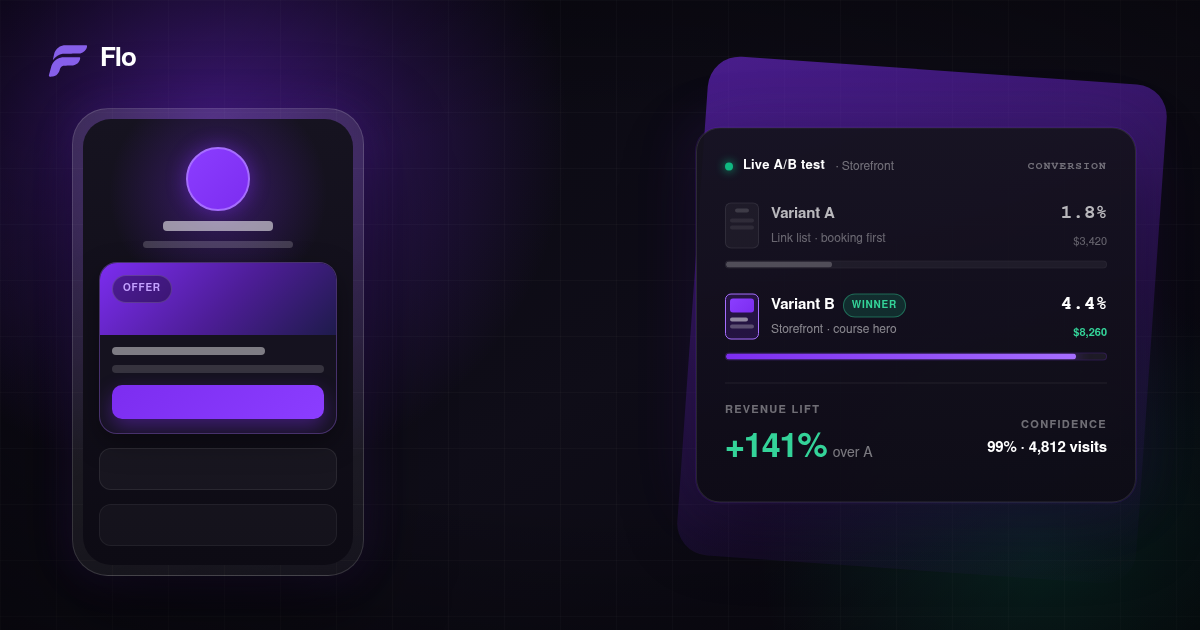
- The page runs live experiments, not static designs. Two versions of a layout, a price, or a headline run side by side against real visitors, and the storefront tracks which one actually converts more of them into buyers, not just more clicks.
- Every change carries a result, not a guess. Instead of shipping a redesign and hoping, a conversion-first storefront gives a real answer: did this version sell more, sell less, or make no measurable difference.
- Measurement isn't a separate step.It's built into the page from the start, not something bolted on after the fact with a third-party script and a dashboard nobody checks.
How this differs from a link-in-bio page
Most link-in-bio tools solve a narrower problem: getting a list of links onto one page, fast. That's exactly why they don't test anything. There's no storefront underneath a list of links to run an experiment on. A conversion-first storefront starts from the opposite assumption: the page is a sales surface, and a sales surface is worth measuring.
That distinction matters more as a creator's audience grows. A few hundred visitors a month can't produce a meaningful test either way. Once a page sees real, consistent traffic, the question stops being "does this page look right" and becomes "is this page converting as well as it could." Only one of those questions has a data-backed answer available to it.
What can actually be tested on a creator storefront
- Which offer leads the page
- How pricing is framed, monthly versus one-time, bundled versus separate
- Headline and hero copy
- The order and structure of the page itself
- Checkout flow and what's offered alongside the primary purchase
Every one of these gets tested against real buyer behavior, with a real result, instead of being decided once at setup and never revisited.
Why this hasn't existed until now
Creator tools have generally split into two camps: easy to set up, or built to sell everything. Testing infrastructure has mostly lived somewhere else entirely, in dedicated optimization software built for companies with engineering teams, not creators working alone. A conversion-first storefront folds testing into the storefront itself. No separate tool, no developer, no traffic minimum that only a handful of accounts will ever clear.
That's the actual definition. Not a feature list, a different starting assumption: a creator's page should be able to prove what it's doing for them, not just represent them.
Frequently asked questions
What does "conversion-first" mean for a creator storefront?
It means the storefront is built to test and measure what actually converts visitors into buyers, layout, pricing, and copy included, instead of choosing those things by instinct and leaving them alone.
How is a conversion-first storefront different from a link-in-bio page?
A link-in-bio page is built to list links quickly. A conversion-first storefront is built to run experiments on a real sales page, testing which version of a layout, price, or offer actually sells more.
Do I need a huge audience before testing helps?
Testing works off conversions, not raw traffic. A smaller audience with real buying intent can produce a meaningful test faster than a much larger audience that's just browsing.
What parts of a storefront can actually be tested?
The lead offer, pricing and how it's framed, headline and copy, page structure, and checkout flow can all be tested against real buyer behavior instead of set once and left alone.
Is Flo available right now?
Flo is in private beta, opening September 15, 2026. Joining the waitlist is the fastest way to get access as new spots open.